
What if growth was never meant to be compartmentalized?
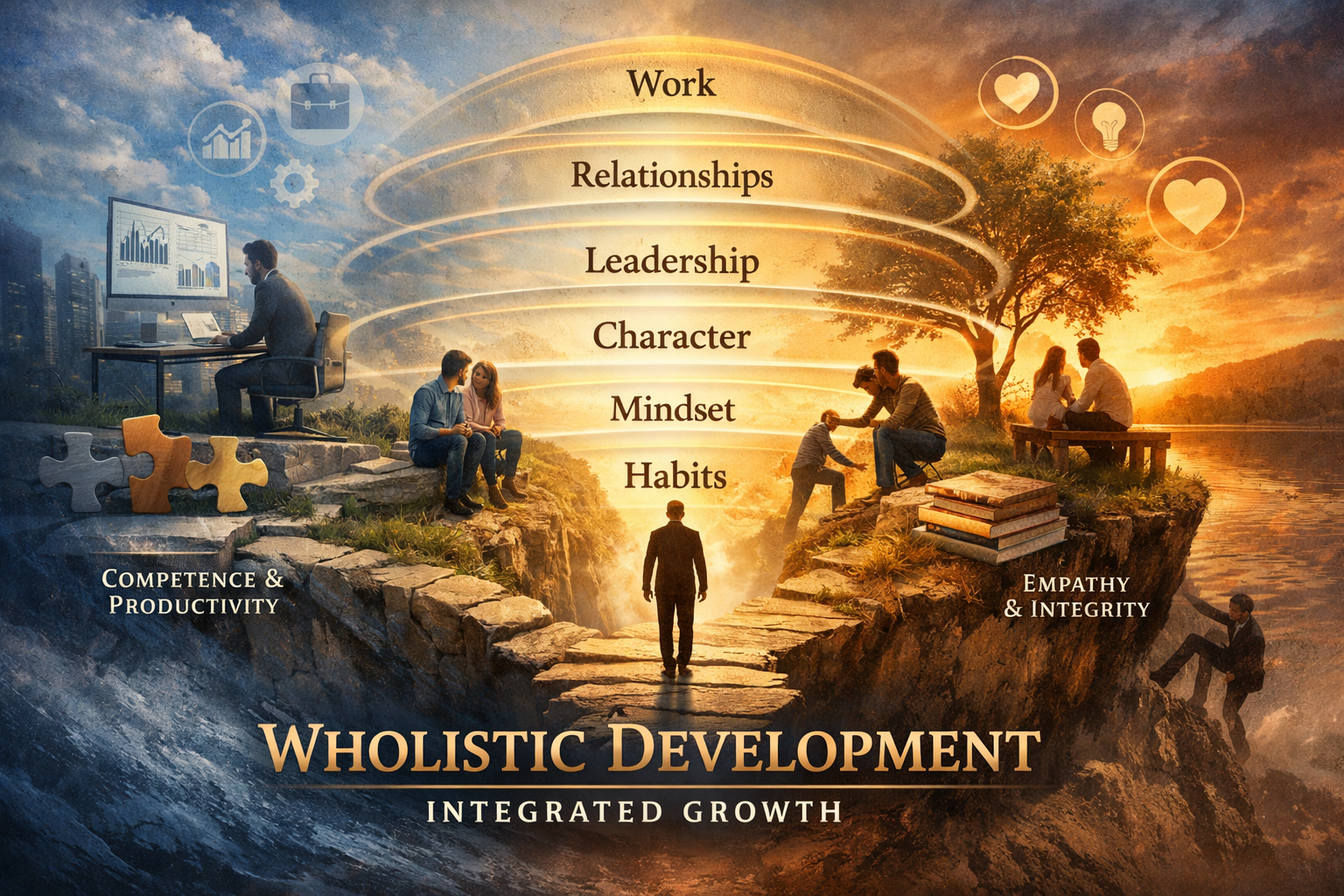
Wholistic development begins with one core idea: growth cannot be compartmentalized. There is no meaningful divide between “important” areas of life and “ordinary” ones. Our work, relationships, leadership, character, habits, and mindset are interconnected. What shapes one area inevitably influences the others.
Yet many people live divided lives. They demonstrate excellence professionally but neglect emotional health. They pursue influence publicly but ignore private integrity. They develop skills but overlook character. This modern version of compartmentalization creates imbalance and inconsistency.
True growth refuses that divide. It embraces an integrated life — where values, actions, and identity align.
Developing the Whole Person
Effective leadership does not address performance alone. It engages the whole person — thinking, behavior, motivation, emotional awareness, and relational patterns.
Whole-person development includes:
Strengthening competence while cultivating character
Encouraging productivity alongside empathy
Challenging blind spots while affirming strengths
Building confidence without feeding ego
Growth is sustainable only when it shapes both inner life and outward behavior.
A Broad Vision with a Focused Investment
Impactful leaders often think broadly but act strategically. They care about influencing many, yet they intentionally invest deeply in a few.
Why focus on a few?
Because transformation requires proximity. Real development takes consistent interaction, honest feedback, shared experience, and accountability. Large environments communicate ideas. Smaller, intentional groups cultivate maturity.
Depth creates multiplication. When a few individuals are developed thoroughly, they in turn, develop others.
The Role of Dynamic Small Groups
Small, intentional groups are powerful environments for growth. In these spaces, individuals are seen, heard, and challenged. Conversations move beyond surface-level exchange into meaningful reflection and accountability.
Dynamic group leadership matters because people are shaped in relationships. When a leader guides a group with humility, clarity, and consistency, the environment becomes transformational.
Such leadership is not about control — it is about cultivation.
What Does Full Maturity Look Like?
Maturity is not flawlessness. It is integration.
A mature person demonstrates:
Consistency between values and actions
Emotional steadiness under pressure
Responsibility in relationships
Openness to feedback
Commitment to developing others
Maturity reflects alignment — who you are internally matches how you lead externally.
Wholistic development is not a program or a phase. It is a lifelong commitment to integrated growth. When development touches every area of life, influence becomes sustainable — and impact becomes generational
